“seed coat” search results (90)
Coffee beans have the same characteristics as those of coffee beans.
1. The seed coat of small fruit coffee has been removed, oval or oval in shape, 8-10mm in length, 5-7mm in diameter, 3-4mm in thickness in the middle, raised on the back, flat on the ventral surface, with slightly curved longitudinal groove and paper seed coat marks. Raw products are yellow or dark green; baked products are dark brown with special aroma and slightly bitter taste. Astringent. Coffee flower 2. Coffee seeds are slightly larger, ovoid, 9-11mm long and 7-7-in diameter.
2016-05-25 Coffee beans respectively same as characteristics small fruits coffee seeds removal seed coat
Coffee beans have the same characteristics as those of coffee beans.
1. The seed coat of small fruit coffee has been removed, oval or oval in shape, 8-10mm in length, 5-7mm in diameter, 3-4mm in thickness in the middle, raised on the back, flat on the ventral surface, with slightly curved longitudinal groove and paper seed coat marks. Raw products are yellow or dark green; baked products are dark brown with special aroma and slightly bitter taste. Astringent. Coffee flower 2. Coffee seeds are slightly larger, ovoid, 9-11mm long and 7-7-in diameter.
2016-05-25 Coffee beans respectively same as characteristics small fruits coffee seeds removal seed coat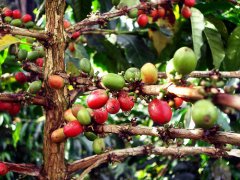
How to grow coffee berries and beans
Coffee fruit is a berry, also known as comb fruit. Oval, 9-14 mm long, young fruit green, red at maturity, purplish red. Each fruit generally has two seeds, but also one or three, showing a semi-oval, there is a longitudinal groove, called grooves. This is the past life of coffee beans, there are coffee branches, leaves, fruits, as well as dissected pulp, seeds, roasted coffee beans. What we see every day
2016-05-31 Coffee berries coffee beans how planting coffee fruit also known as combs
Coffee fruit
The fruit is a berry, also known as comb fruit, oval, 9-14 mm long, young fruit green, red when ripe, purplish red.
2014-06-14 Coffee knowledge coffee fruit coffee encyclopedia
Climatic effect and character Identification of Coffee
1. The seed coat of small fruit coffee has been removed, oval or oval in shape, 8-10mm in length, 5-7mm in diameter, 3-4mm in thickness in the middle, raised abaxially, flat ventral, slightly curved longitudinal groove and paper seed coat marks. Raw products are yellow or dark green; baked products are dark brown with special aroma and slightly bitter taste. Astringent. two。 Medium fruit coffee seeds are slightly larger, ovoid, 9-11mm long, 7-9mm in diameter, dorsal
2014-08-08 Coffee climate influence character identification small fruit coffee seed removal seed coat
About the coffee fruit.
The fruit is a berry, also known as comb fruit. Oval, 9-14 mm long, young fruit green, red at maturity, purplish red. Each fruit generally has two seeds, but also one or three, showing a semi-oval, there is a longitudinal groove, called grooves. The structure of a fruit in which the exocarp consists of a thin layer of hardwood human cells with stomata; the mesocarp (that is, pulp) is large and Lignified by several layers of polygons.
2014-08-07 About coffee fruit berries also known as combs oval 14 mm young fruit
Boutique coffee basic knowledge coffee fruit
The fruit is a berry, also known as comb fruit. Oval, 9-14 mm long, young fruit green, red at maturity, purplish red. Each fruit generally has two seeds, but also one or three, showing a semi-oval, there is a longitudinal groove, called grooves. The structure of a fruit in which the exocarp consists of a thin layer of hardwood human cells with stomata; the mesocarp (that is, pulp) is large and Lignified by several layers of polygons.
2014-12-19 Boutique coffee basics common sense fruit berries also known as combs oval 14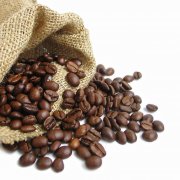
Fine Coffee Coffee basic knowledge introduction Coffee Fruit
The fruit is a berry, also known as comb fruit. Oval, 9-14 mm long, young fruit green, red at maturity, purplish red. Each fruit generally has two seeds, but also one or three, showing a semi-oval, there is a longitudinal groove, called grooves. The structure of a fruit in which the exocarp consists of a thin layer of hardwood human cells with stomata; the mesocarp (that is, pulp) is large and Lignified by several layers of polygons.
2015-05-15 Boutique coffee basics common sense introduction fruit berries also known as combs oval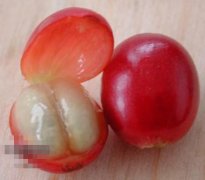
Basic knowledge of fine coffee knowledge of coffee fruit
The fruit is a berry, also known as comb fruit. Oval, 9-14 mm long, young fruit green, red at maturity, purplish red. Each fruit generally has two seeds, but also one or three, showing a semi-oval, there is a longitudinal groove, called grooves. The structure of a fruit in which the exocarp consists of a thin layer of hardwood human cells with stomata; the mesocarp (that is, pulp) is large and Lignified by several layers of polygons.
2015-03-27 Boutique coffee basics common sense knowledge fruit berries also known as combs oval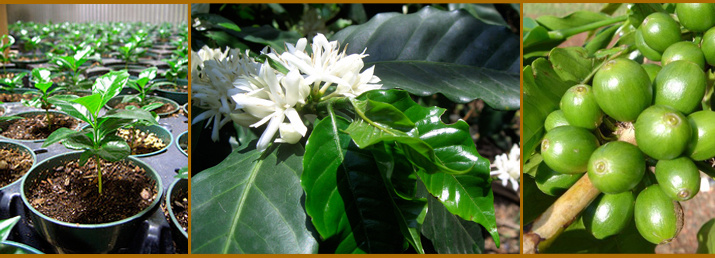
The ripening process of Coffee beans from flowering to ripening Coffee beans
It takes about 9 months (32-36 weeks) for coffee to mature from flowering to ripening. Today, Chongqing Beresta Coffee training School is here to share with friends the whole process of coffee bean growth and ripening. [tiny stage] (the first 8 weeks) Arabica coffee begins to divide eight weeks after flowering and fertilization. [site grabbing stage] (8-12 weeks) the vesicle cavity (inner)
2016-04-05 China coffee coffee beans ripe process spend to how spend to mature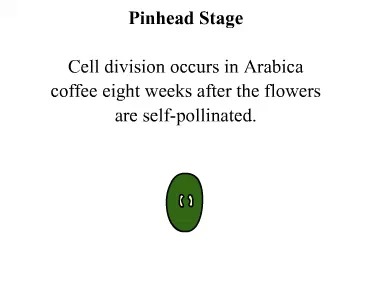
Detailed analysis of the specific changes in the ripening process of coffee beans by diagrams of the growth and ripening process of coffee beans
It takes about 8-9 months (32-36 weeks) for coffee to blossom to ripen. Today, Chongqing Beresta Coffee training School is here to share with friends the whole process of coffee bean growth and ripening. [tiny stage] (the first 8 weeks) Arabica coffee begins to divide eight weeks after flowering and fertilization. [site grabbing stage] (8-12 weeks) vesicle cavity (with ovary)
2016-01-12 Coffee beans growth ripening process diagram detail analysis concrete change coffee
Talking about Coffee beans
1. Summary: coffee is a perennial evergreen shrub or small tree of Rubiaceae. It is native to tropical Africa and has been cultivated for more than 2000 years. The Arabs began to grow coffee in 525 BC, and it was popular for Arabs to stir-fry coffee beans. They began to grow coffee beans on a large scale after the 15th century, and were widely distributed in the tropics and subtropics of Europe, Asia, Africa and Latin America after the 18th century.
2014-07-02 Coffee beans coffee bean history coffee bean uses
A brief talk on understanding coffee beans
1. Summary: coffee is a perennial evergreen shrub or small tree of Rubiaceae. It is native to tropical Africa and has been cultivated for more than 2000 years. The Arabs began to grow coffee in 525 BC, and it was popular for Arabs to stir-fry coffee beans. They began to grow coffee beans on a large scale after the 15th century, and were widely distributed in the tropics and subtropics of Europe, Asia, Africa and Latin America after the 18th century.
2014-09-25 Understand coffee beans and talk about coffee beans
A brief discussion on the knowledge of Coffee beans Encyclopedia
1. Summary: coffee is a perennial evergreen shrub or small tree of Rubiaceae. It is native to tropical Africa and has been cultivated for more than 2000 years. The Arabs began to grow coffee in 525 BC, and it was popular for Arabs to stir-fry coffee beans. They began to grow coffee beans on a large scale after the 15th century, and were widely distributed in the tropics and subtropics of Europe, Asia, Africa and Latin America after the 18th century.
2014-11-12 Coffee knowledge boutique coffee science coffee beans coffee encyclopedia
Coffee beans are important raw materials for making beverages
1. Summary: coffee is a perennial evergreen shrub or small tree of Rubiaceae. It is native to tropical Africa and has been cultivated for more than 2000 years. The Arabs began to grow coffee in 525 BC, and it was popular for Arabs to stir-fry coffee beans. They began to grow coffee beans on a large scale after the 15th century, and were widely distributed in the tropics and subtropics of Europe, Asia, Africa and Latin America after the 18th century.
2015-09-22 Talking about coffee beans production beverages important raw materials overview coffee grass for many years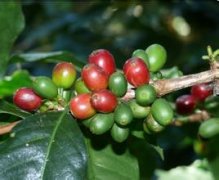
A brief talk on the basic knowledge of Fine Coffee with Coffee beans
1. Summary: coffee is a perennial evergreen shrub or small tree of Rubiaceae. It is native to tropical Africa and has been cultivated for more than 2000 years. The Arabs began to grow coffee in 525 BC, and it was popular for Arabs to stir-fry coffee beans. They began to grow coffee beans on a large scale after the 15th century, and were widely distributed in the tropics and subtropics of Europe, Asia, Africa and Latin America after the 18th century.
2015-06-04 Talking about coffee beans boutique coffee basics common sense overview grass for many years
Coffee and its products-terminology
The national standard of the people's Republic of China Coffee and its products Vocabulary GB/T 18007 1999 terms for coffee and its products this standard specifies the most commonly used terms for coffee and its products. This standard is applicable to the formulation and revision of relevant standards and documents, as well as the preparation and translation of professional manuals, teaching materials, books and periodicals. 2 Coffee nouns and definitions 2.1 General techniques
2015-08-14 Coffee and its products terms people's Republic of China national standards coffee
A brief discussion on the perennial evergreen shrubs of the genus Coffee
1. Summary: coffee is a perennial evergreen shrub or small tree of Rubiaceae. It is native to tropical Africa and has been cultivated for more than 2000 years. The Arabs began to grow coffee in 525 BC, and it was popular for Arabs to stir-fry coffee beans. They began to grow coffee beans on a large scale after the 15th century, and were widely distributed in the tropics and subtropics of Europe, Asia, Africa and Latin America after the 18th century.
2015-08-19 Talking about coffee beans coffee perennials evergreen shrubs overview grass more
The cultivated varieties of Coffee Tree: small seed and large seed
3. Cultivated varieties (1) small seed species (2) large grain species Coffea belongs to Rubiaceae, Coffea belongs to perennial evergreen shrubs or small trees, there are about 90 species. At present, there are small seed species (Arabian species), medium grain species (Gaffra species) and large grain species (Liberian species) cultivated in Hainan. (1) small seed species: also known as Arabian species, native to Ethiopia, evergreen shrubs. The plant is small, 4cm high and 5m high
2015-10-07 Coffee cultivation variety small grain large grain
Coffee bean picking-berry processing-drying process
What we call coffee beans is actually the seeds of a cherry-like fruit. Coffee trees produce berries called coffee berries, which turn bright red to indicate ripeness and are ready for picking. The fruit clustered on the branches. Coffee berries have thick, bitter outer skins (exocarp). However, the fruit inside (mesocarp) is sweet and has a grape texture. And then parenchyma, which is like
2015-03-27 coffee beans picking berries processing drying process we said fruit